

Ecommerce 3PLs
Best for
Solutions — Ecommerce Fulfillment 3PLs
Trenvar is the logistics OS for 3PL operators whose clients are ecommerce brands. Shopify and WooCommerce integration, per-brand inventory separation, per-order billing, and the customer-facing portal that brand clients expect.
Ecommerce 3PLs
Best for
Shopify, Woo, Wix
Channels
Per Order
Billing
Per-Brand
Inventory
Ecommerce fulfillment is the fastest-growing 3PL segment. The shape of the operation matters.
Brand clients want real-time inventory visibility, fast pick-pack-ship workflows, a clean customer portal, and predictable per-order billing. Trenvar is built for that specific operational shape — not enterprise legacy WMS retrofitted to ecommerce.
Ecommerce-specific capabilities
Shopify integration depth, per-brand separation, and the billing model brand clients expect.
Connect each brand client's Shopify or WooCommerce store. Orders flow into the warehouse fulfillment queue automatically. Inventory levels sync back to the storefront in real time.
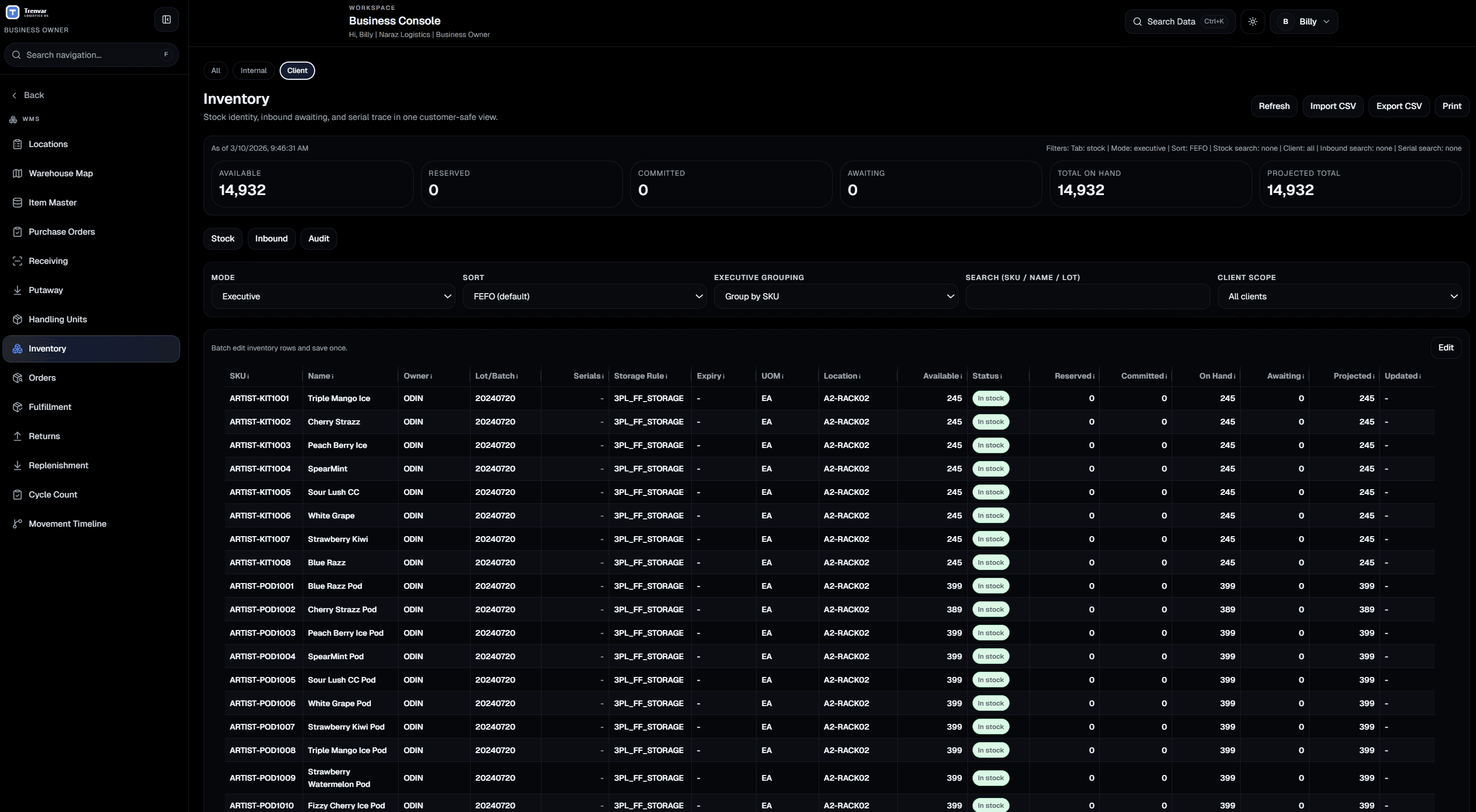
Each ecommerce brand client gets its own inventory ledger, SKU catalog, and fulfillment rules — without contaminating data across the brands you serve.
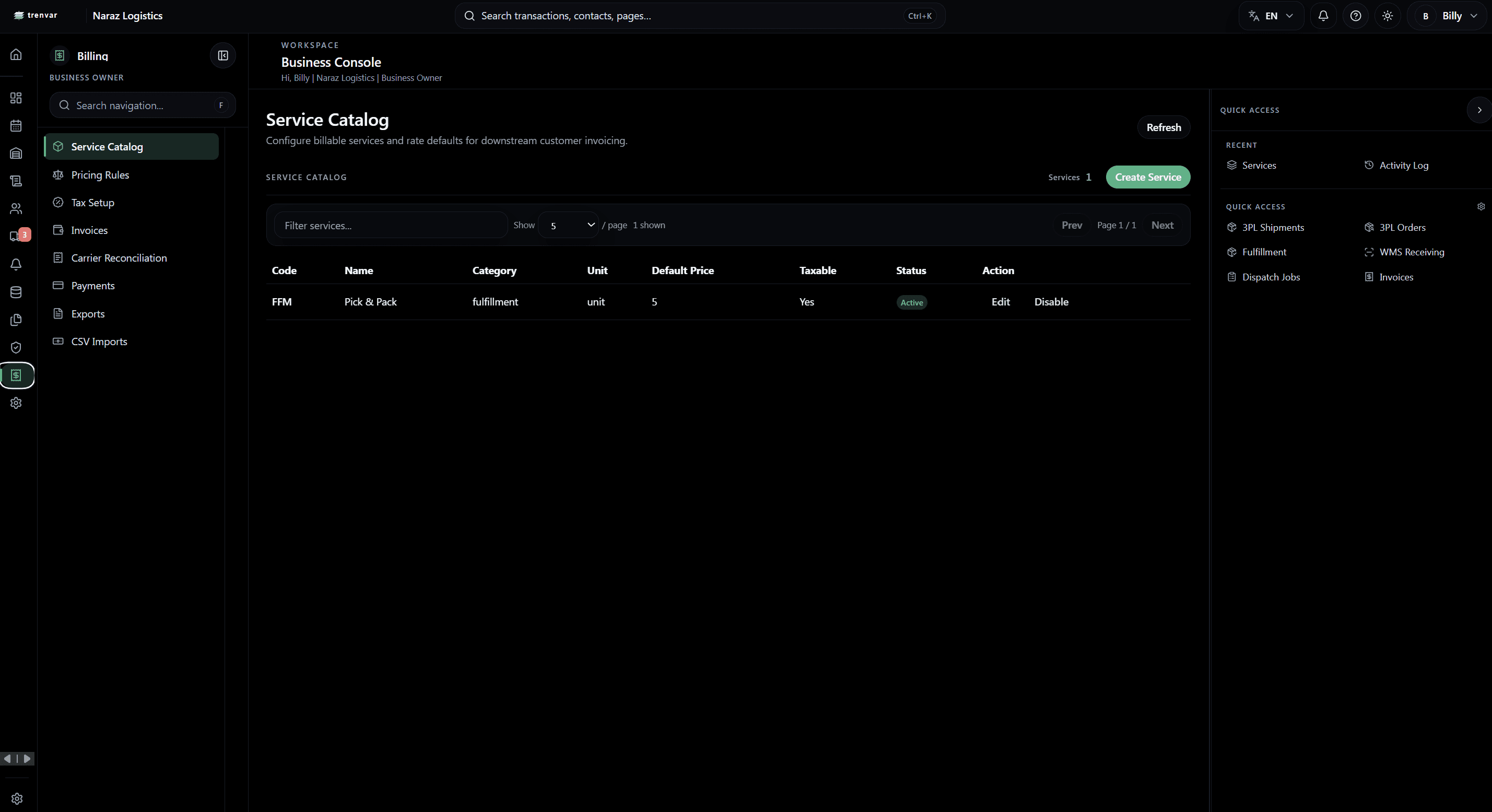
Bill ecommerce clients on a per-order basis — pick fees, pack fees, packaging surcharges, kitting charges. Charges accrue from real fulfillment events into client invoices.
What ecommerce 3PLs run
From storefront order to shipment confirmation, every step on the same operational record.
Shopify, WooCommerce, Wix order webhooks land directly in the warehouse fulfillment queue.
Scan-oriented pick workflows with packaging rules per brand. Packing checklist enforces brand-specific kit composition.
Carrier label generation, shipment confirmation back to storefront, tracking visibility to the end consumer.
Per-order fees, packaging surcharges, special services — all accrued from real fulfillment events into the client's invoice.
Customer-facing experience
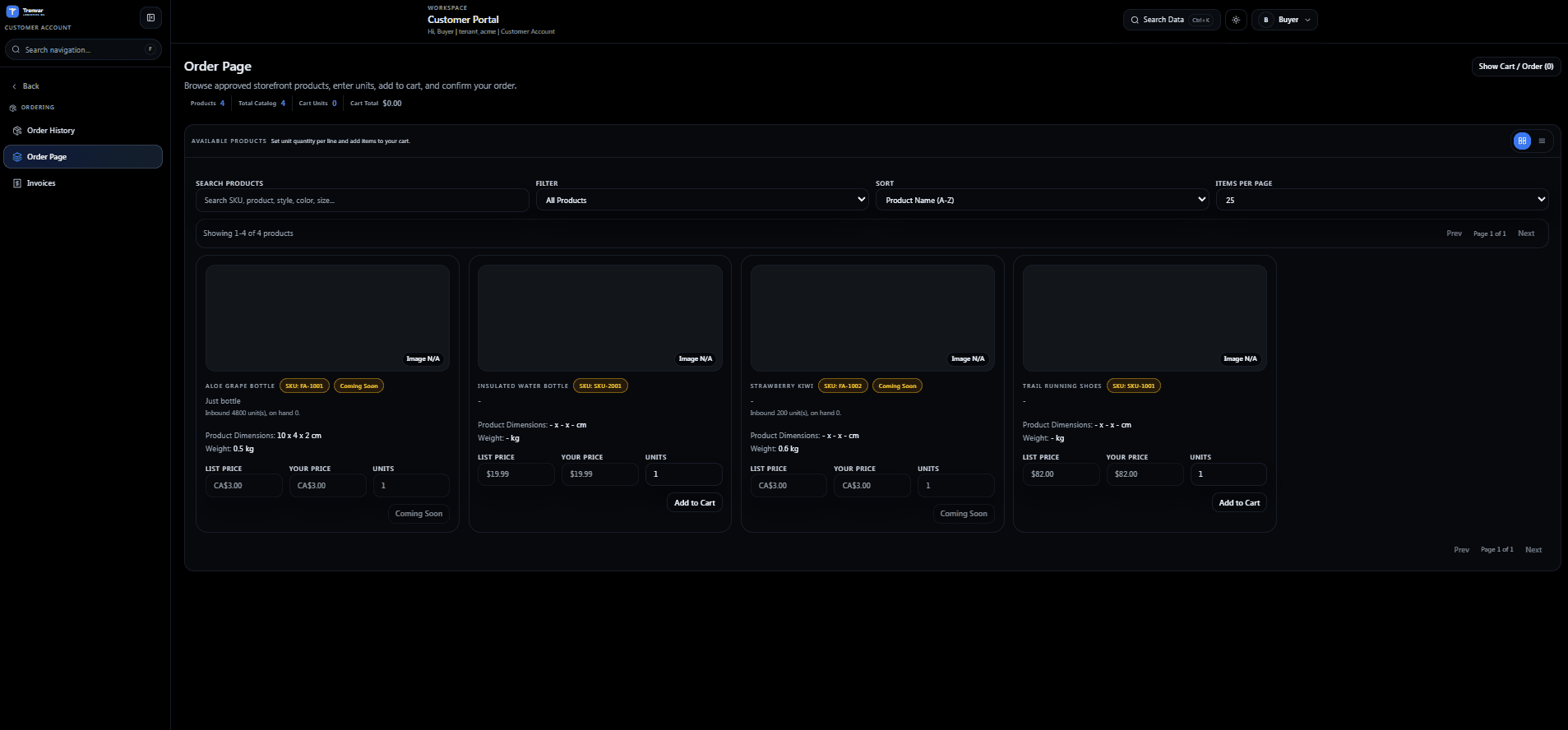
Brand clients log into their own scoped workspace to see inventory, orders, shipments, and invoices. Built-in customer chat reduces the support email volume.
Each brand sees only its own inventory, orders, shipments, and invoices. Real-time inventory visibility, order status tracking, and downloadable shipping reports — without operators sending screenshots over email.
Brand clients message your operations team directly inside the platform — no separate Intercom seat, no support email queue. Customer-facing staff are always reachable; specialised roles stay scoped.
FAQ
What ecommerce 3PL operators ask when evaluating a new platform.
Each brand client's Shopify store connects to Trenvar via OAuth. Orders flow into the warehouse fulfillment queue automatically, inventory levels sync back to the storefront in real time, and shipment tracking flows back to the customer when the order ships. The integration is scoped per client — your Shopify connection for Brand A never touches Brand B's data.
Trenvar supports WooCommerce, Wix, and other channels alongside Shopify. Each brand client can use whichever platform fits its business. The 3PL operator sees one unified fulfillment queue across all client storefronts.
Yes. Per-order pick and pack fees are the typical billing model for ecommerce 3PL clients. Trenvar's rate card structure supports per-order, per-line, or per-unit pricing — plus packaging surcharges, kitting charges, and any special service work. Charges accrue from real fulfillment events.
When an ecommerce order is returned, the inventory adjustment posts back to the brand client's ledger, the Shopify (or other channel) inventory updates, and the return event flows into the operational record. Returns workflows can be configured per client — restock, dispose, or hold for inspection.
Many ecommerce brands run both DTC (Shopify) and B2B (wholesale) channels. Trenvar supports mixed fulfillment models — DTC orders flow through the standard pick/pack queue, while B2B orders can route through the Commerce OS buyer portal with different rate cards and packaging requirements. Both stay on the same brand client's inventory ledger.
Yes. Trenvar works well for 3PLs whose entire client base is Shopify brands — the integration depth, per-brand billing model, and customer-facing portal align with how Shopify-first DTC fulfillment operates. If you also run wholesale clients or transport-heavy operations, Trenvar covers those without switching systems.
Bring a sample brand client's Shopify store and a typical order flow. We will demo the end-to-end fulfillment workflow — order to ship to bill — in 30 minutes.
No credit card required · Go live in under 48 hours