

Event-Backed
Approach
3PL Billing Automation
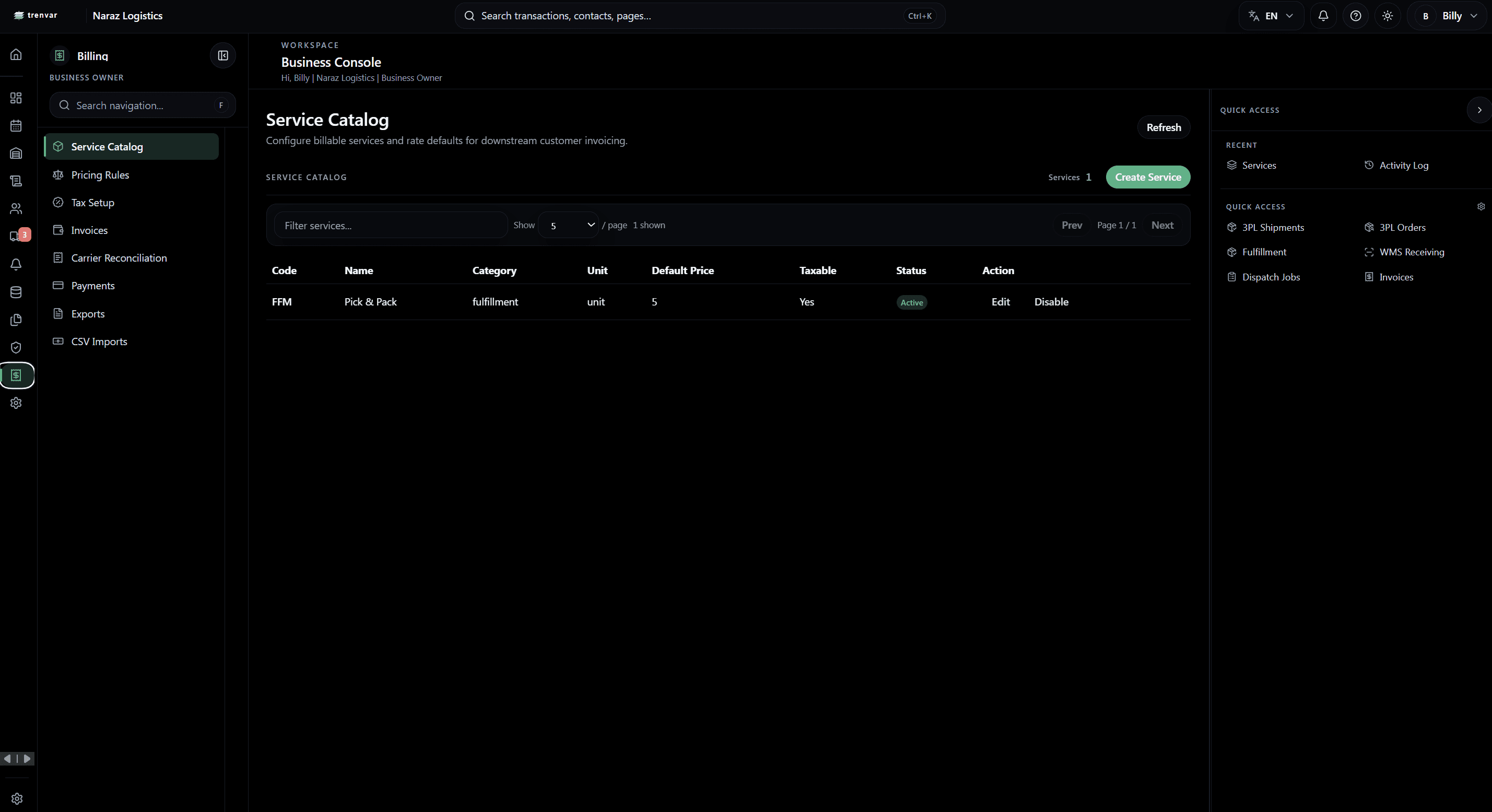
Trenvar's billing engine accrues charges from real operational events. Storage, handling, picking, shipping — all matched to per-customer rate cards and flowed into invoice runs without month-end spreadsheet reconciliation.
Event-Backed
Approach
Per Customer
Rate cards
Continuous
Reconciliation cycle
QuickBooks
Accounting export
Stop assembling invoices from spreadsheets. Start invoicing from operational events.
The work that takes finance teams days every month — counting storage days, totaling handling events, reconciling shipment labels — disappears when every billable event is captured at the moment it happens.
How it works
The billing flow from warehouse activity to invoice delivery.
Every operational event — inbound receipt, putaway, pick, pack, ship, storage day — emits a billing-relevant record into the platform.
The billing engine matches events against per-customer rate cards in real time. Charges accrue against the customer's billing ledger as the operation happens.
At billing-run time, your finance team reviews the accrued ledger, flags exceptions, and approves the invoice run — no spreadsheet recalc.
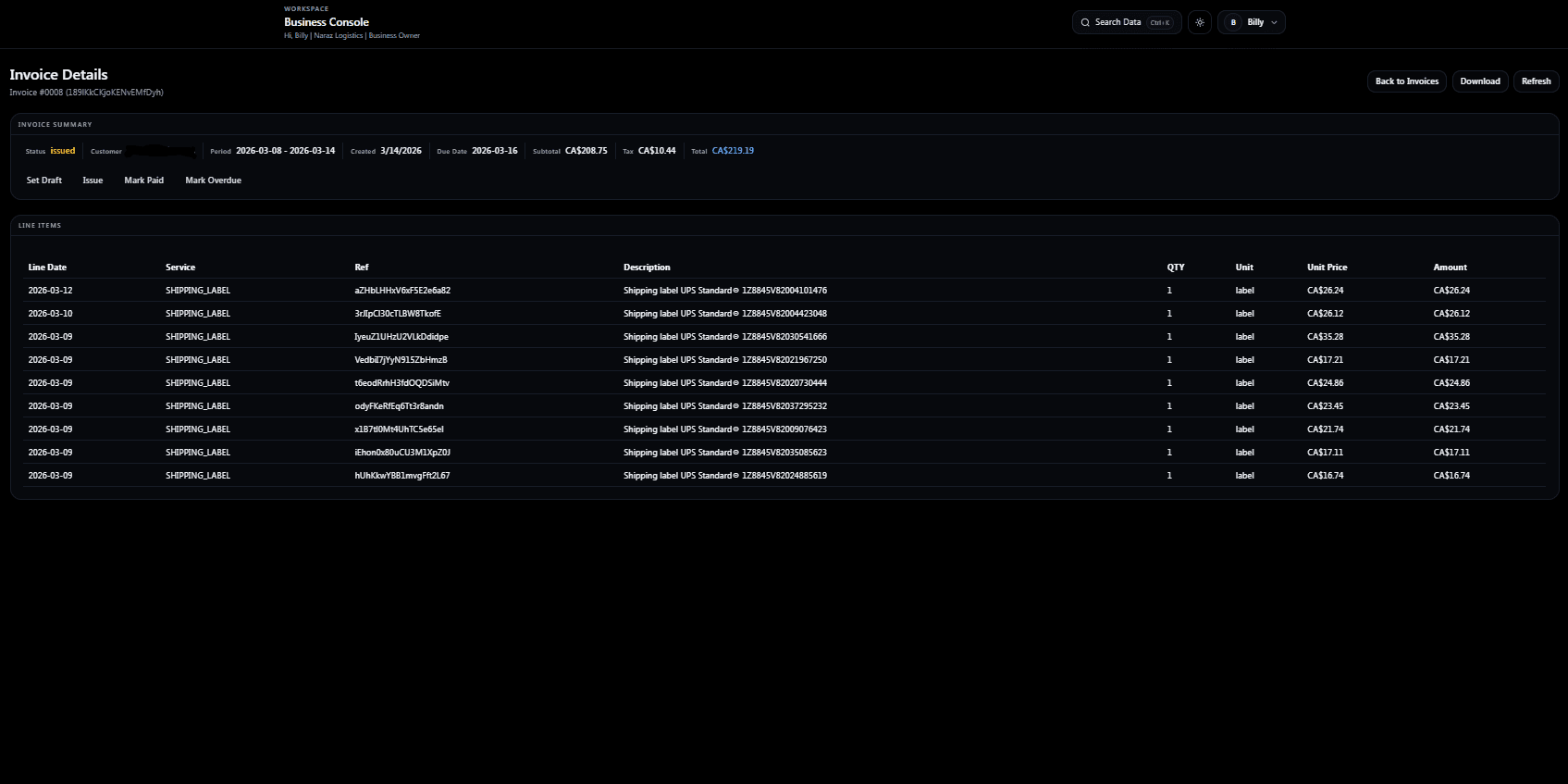
Approved invoices generate PDFs, send to customers, and sync to QuickBooks (or other accounting tools). The customer-facing portal shows invoice status.
Billing automation features
The capabilities that turn warehouse operations into invoice-ready financial records.
Every billable warehouse event — receiving a pallet, picking an order, storing inventory for another day — accrues into the customer's billing record automatically. No month-end spreadsheet reconciliation.
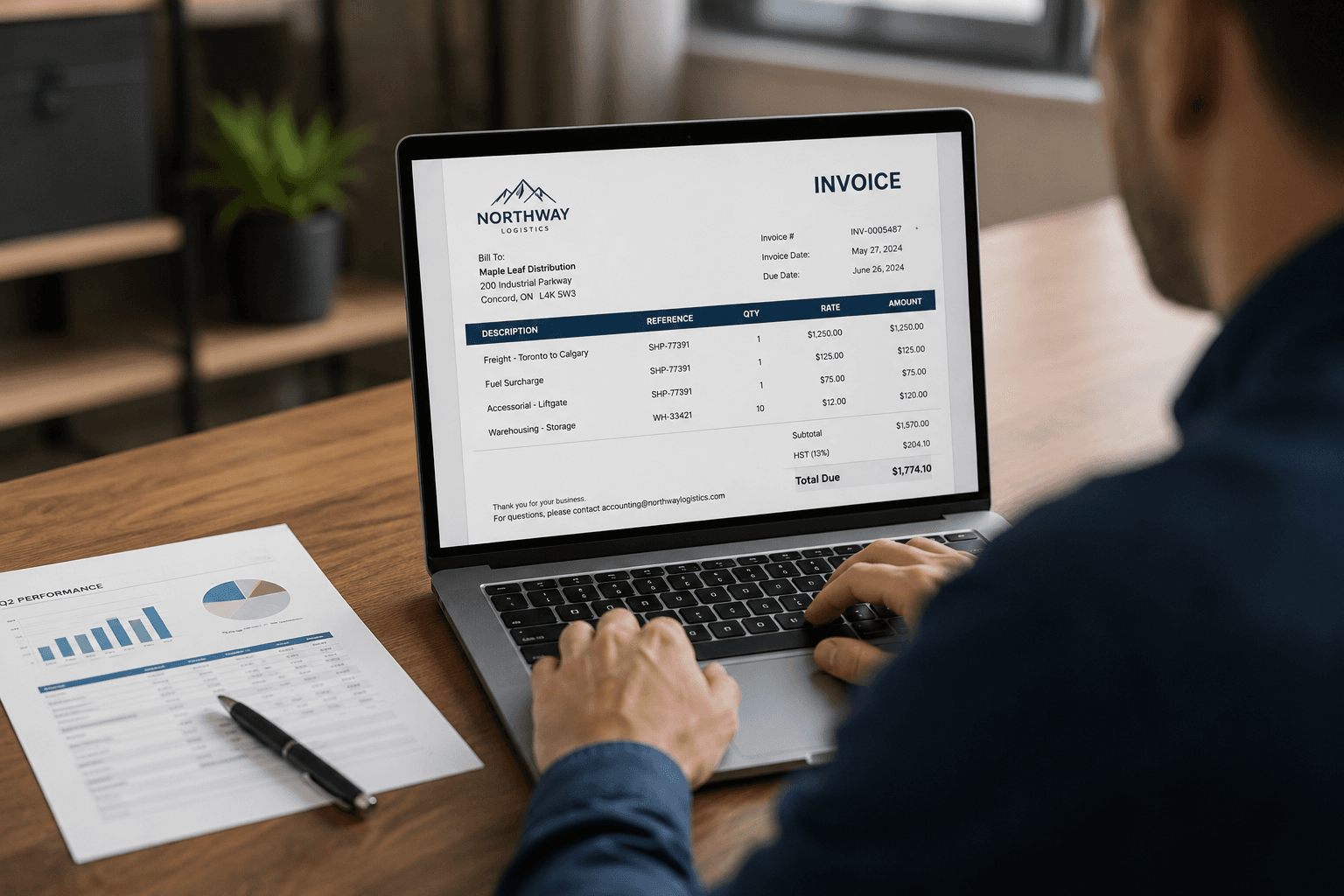
Each customer gets its own rate card — storage tiers, handling fees, special-service charges, packaging surcharges. Charges auto-apply when the matching event fires.
Approved charges flow into invoice runs with PDF generation, customer delivery, and clean export to QuickBooks or your accounting system. No manual line-item assembly.
What this replaces
A common pattern — and the failure modes that come with it.
Operations exports a CSV from the WMS. Finance opens a Google Sheet for each customer. Storage days are counted from inventory snapshots. Handling charges are tallied from operations logs. Shipping labels are reconciled against carrier invoices manually. Three days later, invoices go out. Customer disputes a charge — finance traces the spreadsheet logic back to the export, and the spreadsheet is gone.
Trenvar replaces this loop with continuous event-backed accrual, traceable from invoice line directly to operational event.
FAQ
Answers to the questions 3PL operators ask before switching from manual billing.
3PL billing automation is the practice of generating customer invoices directly from real warehouse and shipment events — receiving, storage, picking, packing, shipping — instead of assembling invoices manually from spreadsheets at month-end. Every billable activity captured in the WMS becomes a billing line automatically, matched against the customer's rate card.
Two reasons. First, it eliminates the month-end reconciliation cycle where ops manually counts storage days, handling events, and special services from logs. Second, it produces auditable invoices: every charge traces back to a specific operational event with a timestamp, which makes customer billing disputes much faster to resolve.
Each customer has its own rate card — storage rates (per pallet, per cubic foot, per handling unit), handling charges (receiving, putaway, pick, pack), special services (kitting, labeling, photo verification), and packaging surcharges. Rate cards support tiered storage (different rates by age or volume), promo overlays, and effective-date changes.
Yes. Approved invoices export to QuickBooks Online with customer mapping, line-item detail, and GL coding. Other accounting integrations are on the roadmap or supported through webhook payloads for custom syncs.
Trenvar's billing layer includes carrier reconciliation — you upload a carrier invoice (PDF or CSV), the system auto-matches line items against your shipment records, surfaces variances, and queues chargebacks for your finance team to review. That work that takes ops days every month becomes one workflow.
Yes. We support import from spreadsheet templates and from common 3PL billing systems (3PL Warehouse Manager, manual Google Sheets setups). The migration step typically takes a day or two depending on rate card complexity and is part of the standard onboarding.
Bring your current rate card structure and a sample customer invoice. We will model the same billing on Trenvar and show you the operational record behind every line item.
No credit card required · Go live in under 48 hours