

Multi-Tenant
Architecture
Multi-Tenant WMS for 3PL Providers
Trenvar's multi-tenant warehouse management system gives 3PL operators customer-level inventory separation, role-safe portal access, and per-client billing — all on one platform.
Multi-Tenant
Architecture
Unlimited
Clients per workspace
Module-Based
Pricing model
Built-in
Customer portal
One platform. Many independent customer workspaces. No cross-contamination.
Multi-tenancy is not just about logging in as different users. It is about how the data layer, billing engine, and portal experience are designed from the ground up to serve many independent customers safely from a single warehouse operation.
Architecture
The three structural choices that make Trenvar work for 3PL operators serving many client brands.
Trenvar's multi-tenant architecture lets one warehouse operation serve many independent customers from a single platform instance. No separate database per client. No federated logins. One operational record, scoped by customer.
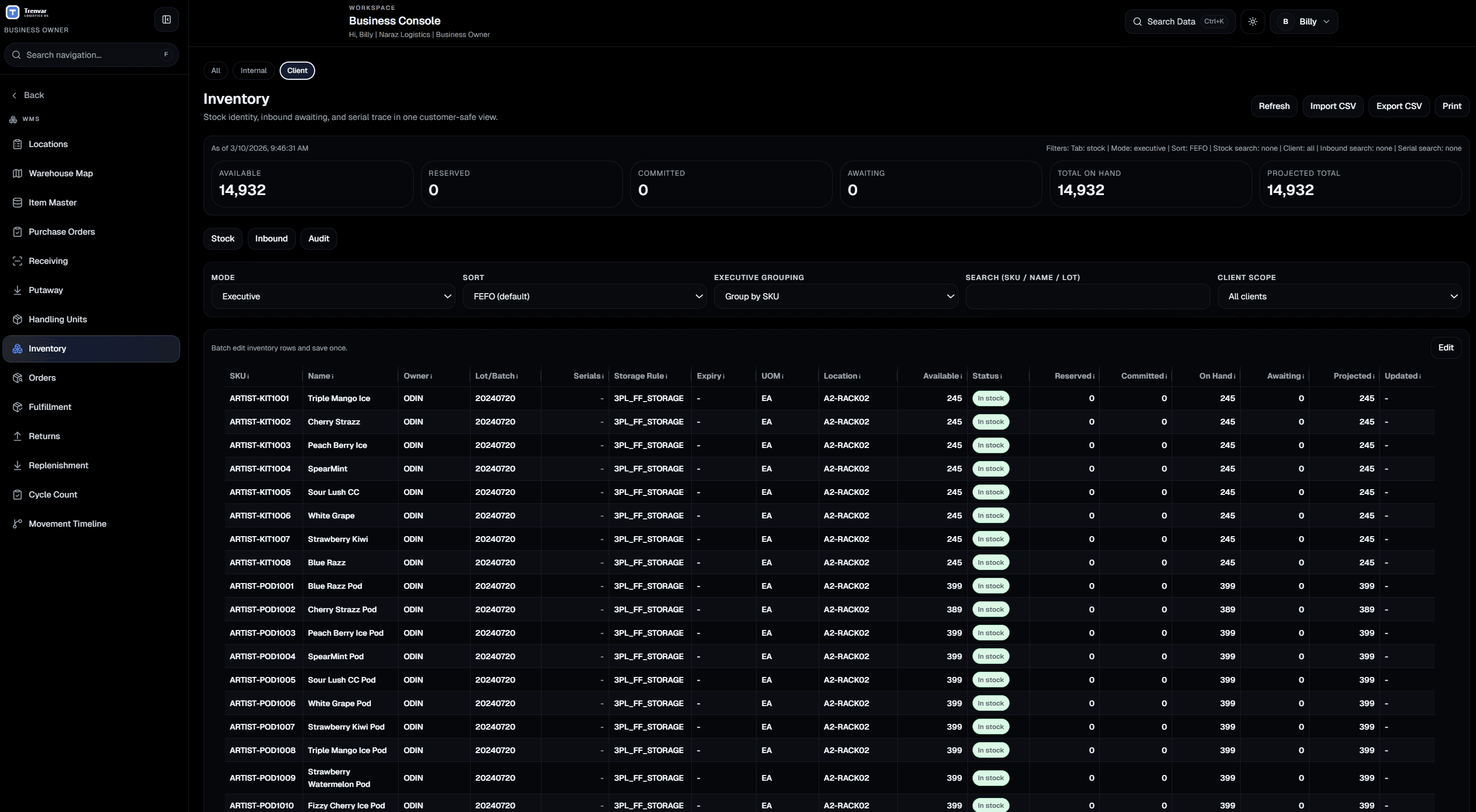
Every record in Trenvar carries a workspace boundary. Inventory, orders, invoices, and audit logs are filtered by the workspace context — there is no path to query across customer workspaces without explicit role grants.
Operators see the unified warehouse floor — inbound dock, picking aisles, outbound staging — but each customer's inventory, charges, and reporting stay separate. One operation, many clients, no spreadsheet glue.
Multi-tenant capabilities
Customer-level inventory, role-safe access, and per-client billing — without spreadsheet glue between systems.
Each client owns its own inventory ledger. Stock movements, lot/serial tracking, and adjustments stay scoped to the right customer workspace — no cross-contamination.
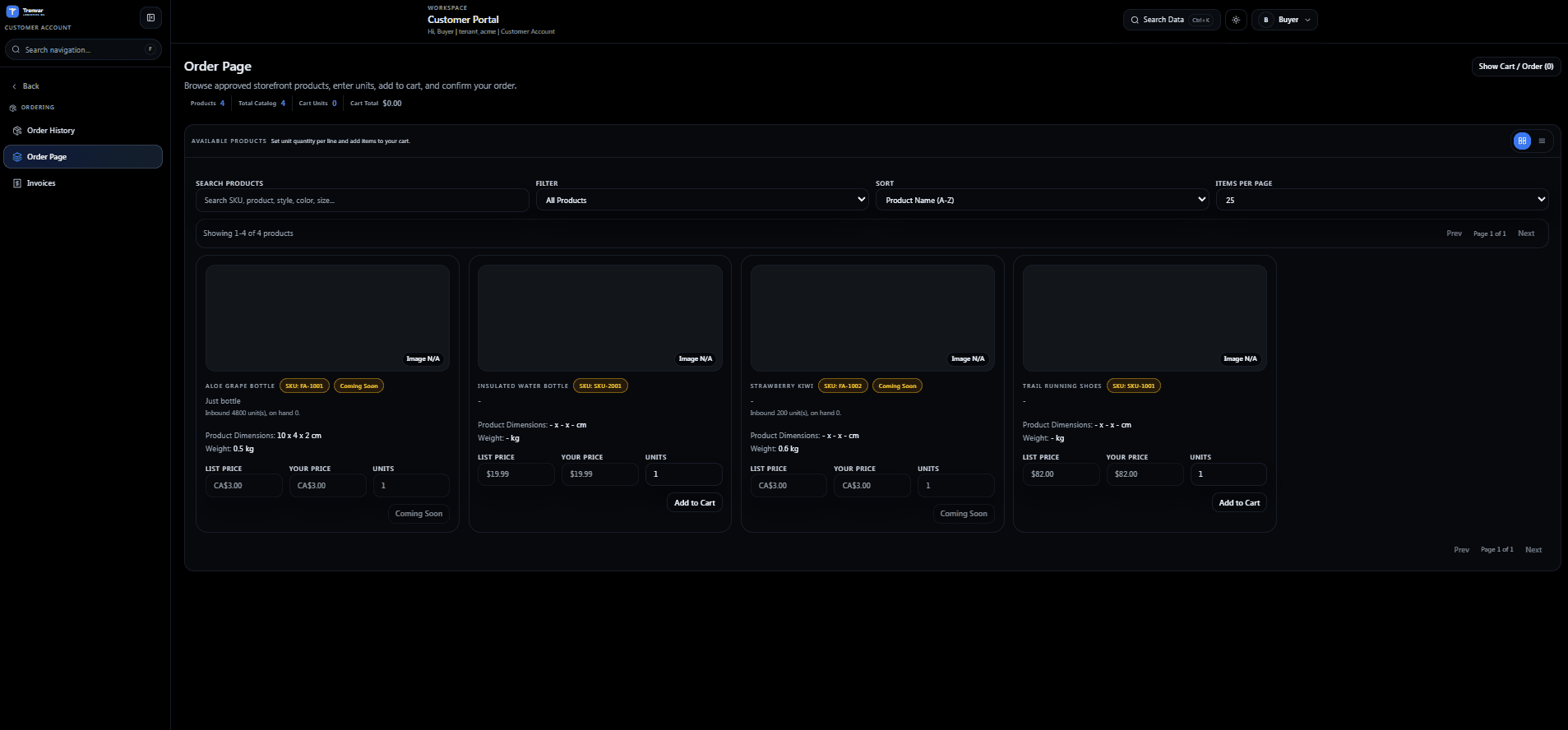
Give each client visibility into their own inventory, orders, and invoices through a customer-facing portal — without exposing other clients' data or operational controls.
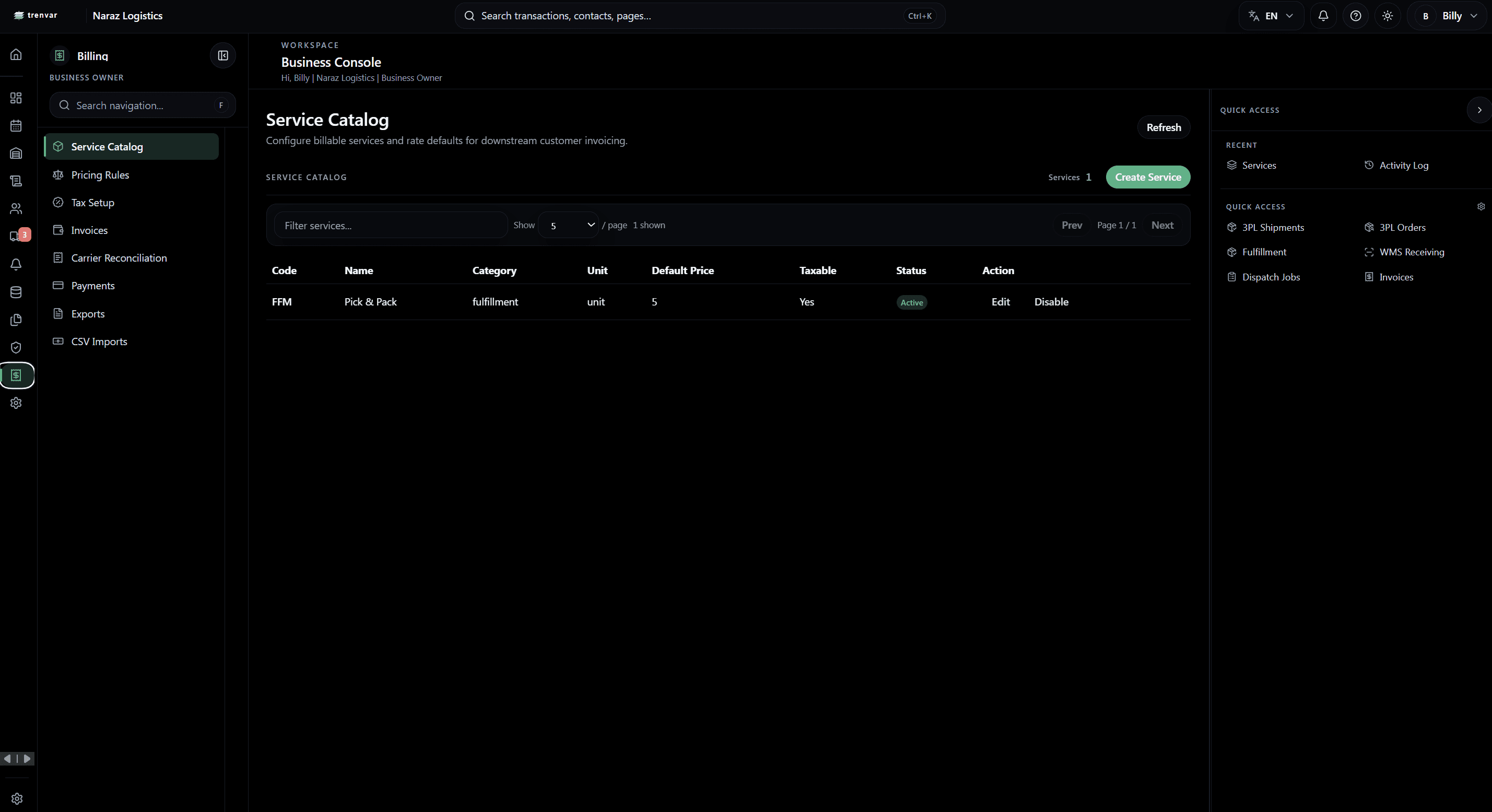
Every customer can run on its own rate card — storage rates, handling charges, picking fees, and special-service rules. Charges accrue from real warehouse events into invoice-ready records.
When multi-tenant matters
If you serve more than one independent customer from the same warehouse, multi-tenancy is not a nice-to-have — it is a structural requirement.
3PL providers
Serving five, fifty, or five hundred brand clients from shared warehouse floor space. Each client needs its own inventory ledger, rate card, and customer portal — without operators bouncing between systems.
Wholesale + distribution
Distributors managing multiple brand lines with separate commercial agreements per brand. Multi-tenant keeps brand-level reporting clean and prevents commercial-data leakage between supplier accounts.
FAQ
Architecture, isolation, and onboarding questions from 3PL operators.
A multi-tenant WMS is a warehouse management system that supports multiple independent customer accounts (tenants) running on a single platform instance. Each tenant has its own inventory, orders, billing, and access controls — but the underlying warehouse operation, codebase, and infrastructure are shared. This is the standard architecture for 3PL providers serving multiple brand clients from one warehouse.
Multi-warehouse means one organization runs multiple physical warehouses. Multi-tenant means one platform serves multiple independent customer organizations — typically the structure 3PL operators need. The two can combine: a 3PL with three warehouses serving twenty client brands is both multi-warehouse and multi-tenant.
Yes. Trenvar enforces workspace isolation at the data layer. Each customer workspace is scoped — when a client logs into the customer portal, they see only their own inventory, orders, invoices, and shipments. Cross-workspace access requires explicit role grants and is logged in the audit trail.
Adding a new client is a workspace provisioning step, not a platform reconfiguration. Create the client workspace, assign the rate card, grant operator access, and the client is live. Pricing is based on Trenvar's OS packages — not on the number of client workspaces — so you can grow the client list without renegotiating commercial terms.
Yes. API credentials, webhook destinations, and connector configurations are scoped to the workspace. A client using Shopify gets their own Shopify connection; a client using QuickBooks gets their own QuickBooks sync. Operators see all configurations; each client sees only their own.
Conceptually yes — both are multi-tenant WMS platforms designed for 3PL operations. The architectural difference is that Trenvar runs a single unified codebase across WMS, billing, transport, and commerce, while Extensiv's suite is assembled from multiple acquired products. Feature parity on the WMS + billing core is close; the breadth and pricing model differ.
Bring your client count, channel mix, and current data separation approach. We will walk through how Trenvar's workspace model applies to your operation.
No credit card required · Go live in under 48 hours